
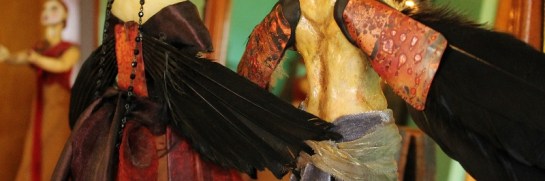
As you know if you’ve been following my process, I have been playing and experimenting in my figurative work, which is posted on:
I’ll be posting new things regularly in my Santos Gallery there. Come and visit!
Thanks for checking in!
-Linda 🙂
As you know if you’ve been following my process, I have been playing and experimenting in my figurative work, which is posted on:
I’ll be posting new things regularly in my Santos Gallery there. Come and visit!
Thanks for checking in!
-Linda 🙂
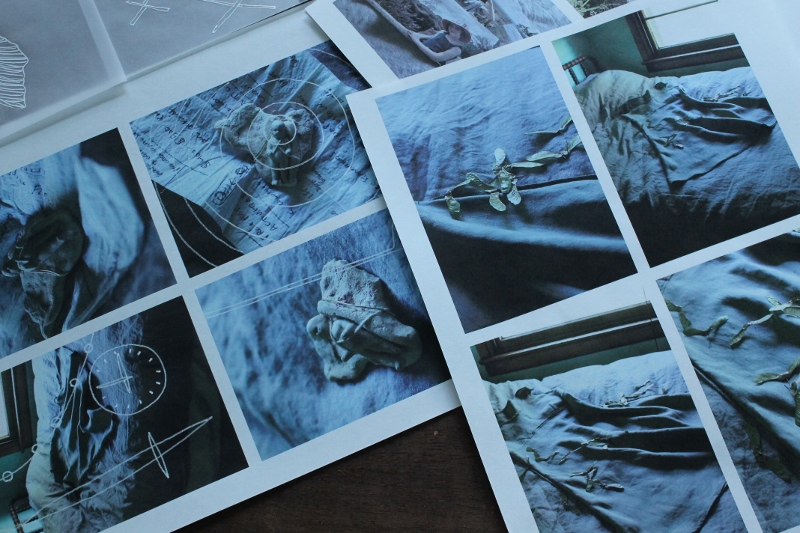
Linda Lenart McNulty-Linen Bedroom Photos
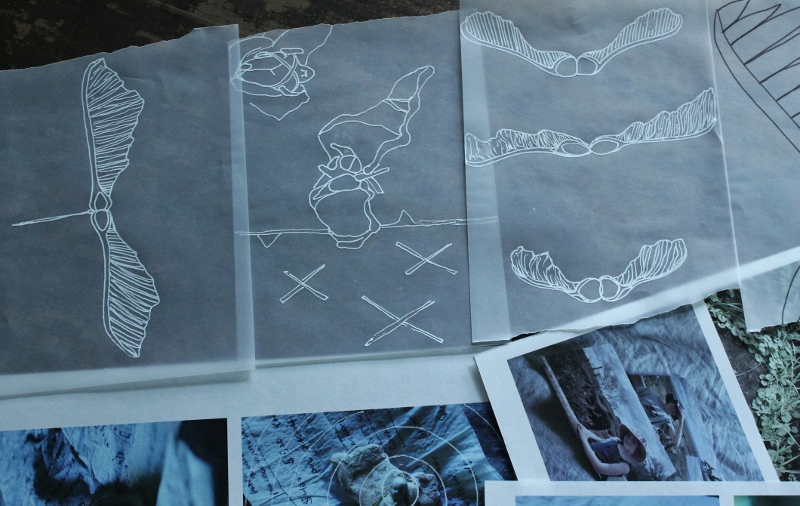
Linda Lenart McNulty-Linen Bedroom White Sketches
I was trying on my linen dress, pinning it up to alter it because it didn’t fit quite right, and threw it onto my linen bed. I laughed because if I could cover my world in linen I would. The lighting was gorgeous because it had just stormed.
And just that morning I had been pondering how an artist could, rather than just depicting the objects in one’s environment as an expression of themselves (like an artist drawing their dinner or their garden), one could take the art around them, the meaningful art made by the hands of those who loved them, and re-enter it into one’s art, giving that art double-duty so to speak: art within art. Not a new thought, for sure, but my thought.
I went into one of my photographic rampages. Yes, we all have these rampages, and they are good to keep our images fresh and to keep them rolling in for our artwork. Well, what a supply of imagery came rolling in!
The artwork I chose was by my sister Cheri, who died two years ago. For me she had made this precious little angel from a broken frozen charlotte with a stone for wings. The stone was drilled, and a simple white, waxed linen string was criss-crossed over the charlotte’s chest. Speaking of doing double-duty, she made this angel for me when my baby died 14 years ago, and now she has died, and so the angel speaks in doubles.
They each got a photo session, the dress I covered in a sprinkling of maple tree helicopters, which I had preserved this year, as I had planned on drawing them as much as I could. But now, scattering them all over the linen-on-linen bed, I was reminded of the scene in the Little Women movie, where Beth’s bed is covered in rose petals.
Finally, I drew the helicopters and winged charlotte on tracing paper with white ink. These will be layered in the Art Journal, Linen Bedroom, that is emerging.
I just wanted you to see how a simple hunting with the eyes and gathering of significant objects in your environment can really drum up personal imagery just by laying them out for yourself with intention. It will come together for you as well. You just start where you are. Take a breath, and begin.

Oui, je vois! -Art Journal page by Linda Lenart McNulty
Discovering Art Journaling was for me, like seeing a path, and so the next set of pages in my Art Journal is called “Oui, je vois le chemin!” or “Oui, je vois!” “Yes, I see the path! Yes, I see!”
The precious face of the creature in flight, I found in a magazine last year. She has an expression like my daughter’s when she was young, and is a little peeved about the journey even though the path has finally shown itself from such a height.
I had been playing around recently with a type of hollow script I invented when I was a teen, and I wanted to get back to my roots so I “let it come” as Pooh says, into my work today. I am sure I wasn’t the only inventor of this hollow script, but there is my version. I’ll be using and teaching that to whomever likes such a thing.
Another little piece of nostalgia for me was a chocolate wrapper diamond I saved from a day when I offered chocolate to students in my encaustic workshop (must have been valentine’s day).
I also sculpted up a little head for a Santos to come. I will post photos on that process tomorrow or Monday.
Thanks for checking in!
-Linda

Cloaked Garden-Art Journal page by Linda Lenart McNulty
I started my art residency chez-moi yesterday, but rather than jumping right into encaustic painting or right into figurative sculpting I found myself launching into Art Journaling.
You know how I love encaustic art, but out of my periphery I have been catching glimpses, really for the last two years, of artwork made with Acrylic Gel Medium and Acrylic Paint. And I found myself getting a little jealous of such a portable art form!!!
To tell the truth, I absolutely love the sheen and glow of Acrylic Gel Medium (can you say Luminous), and it turns out it is very much like a portable form of Encaustic Medium. Both are wonderful at grabbing up Mixed Media. And for my Art Journaling classes, acrylic gel medium will be center stage to lock all of our mixed media enterprises into place.
But here is the deal on Art Journaling: whether you are new to art or have been around the block a few times, this journaling form of art is a great way to connect into your-singular-creative-voice.
The other part of you, the part that needs healing- the part of you that’s looking for refreshment- the part who’s life is way too busy- who’s mind is too cluttered, too distracted and who’s body is reminding you that life is short… that part of you gets to reach in and grab ahold of the other part- the part that has been buried and ignored for so long. The two of you can go out to play and you will actually experience a zen-like state as you connect all your parts.
And for all of you professional Artists, listen up! Art Journaling differs beautifully from your studio work because as you are making it, you know it’s just not for sale, so the intention is completely different going in. Let’s face it- even if you are making a series of pieces for a gallery show, you are in the creative zone, but you and I both know that the market is breathing down your neck like a relentless beast who needs a salable product! Even a conceptual installation piece, for which you convince yourself there is no market- you know is not true, because the market is your next grant or resume check mark.
Art Journaling takes you on a journey (isn’t that where the word “journal” comes from after all?) into the deep recesses of you that can only make a wiser, better and happier you, as you navigate the complex world you’ve created for yourself in the first place.
This fall I’ll be teaching Art Journaling at FAVA, and I hope it will gather a mixed group that gets as addicted to it as myself so we can continue connecting over and over, sharing the journey together, like an artist’s group, guided by my word and mixed media prompts. And FAVA will be granting special veteran discounts so you can keep returning affordably after you’ve learned the ropes. Like taking yoga! Paper Yoga…Handmade Book Yoga. See you there!
Now back to my art-residency-chez-moi! My studio awaits!
Blessings!
-Linda

If your summer is anything like mine, with kids home from college, family reunions, programs and festivals, you might love to find a niche for yourself with a little artistic retreat, or “artist residency” for yourself. My artist friends regularly take residencies in exotic places, but I haven’t always been able to get away. Well, rather than wait for that day to come, I am taking the residency bull by the horns and cornering him, and myself, in my home studio, where I will appear each day for 10 days, until the summer hubbub is likely to begin again.
The point is to turn off the mom light that’s always hanging right in the kitchen. Turn the sign over…from “Open” to “Gone Fishin’” and make your escape while you can. Set parameters for yourself. Myself, I am torn between diving into my Santos work, which has been on hold for a while, and tackling the large cradle boards I bought for a series of encaustic paintings. My journal, luckily, is chocked full of notes, so I know just where to begin, regardless of my choice of project.
I am going to photograph and blog on my process. I hope you can join me- My friend Nanette is joining me. She’ll be doing screen printing, and she’s asked me to take part in her process for a few days. I don’t know if our dates coincide exactly, but I’ll post on that experience too, wherever it falls.
Alright, let’s get planning, clearing a space, and hitting our journals. Talk to you soon!
-Linda

Linda Lenart McNulty – Encaustic Shakudo
Here is a technique I have developed, called Encaustic Shakudo. It entails every type of Metal Leaf, used together on Encaustic wax, mellowed with a blue-black patina.
Shakudo is a Japanese metals technique historically used in the making of swords for Samurais, which, once the Samurai class became obsolete, showed itself in jewelry. A gold and copper alloy was used to make a black patina, which was then engraved upon to create intricate design work.
As you can imagine, approaching Shakudo with Encaustic wax and Metal leaf is a much simpler approach! Like any great “invention”, Encaustic Shakudo was really just a product of a lot of playtime in my studio. Each of my Encaustic Shrines incorporate this new technique to some extent, and some of my favorites use it the most.
In the Encaustic Shrine above, named, Saint with Tears, the sunlight connects with the different colors of the metal leaf, while the dark pigments offset the sparkling metals with just the right amount of aging. It’s a beautiful Shrine, and within it’s beautiful frame of aged metals, our beautiful heroine, the Encaustic Shakudo Saint, has her back turned to the viewer, so we actually look through her eyes along with her, and into the night sky. Her tears fall like rain. She holds the pain of our pasts for us, so we are free to move on.
I made this piece after my artist sister, Cheri, died of cancer. My heart was broken, but I could move on knowing my little heroine was holding up the sky for me, so to speak. It’s powerful for me. I hope you connect to the piece as well.
– Linda
I was talking with the artists in my last workshop, and the questions came up:
“How do artists get all their work to look the same?”
And “How can I get my work to look like that?”
Of course, what we were referencing was the creating of a body of work; and the question being posed pinpointed the issue we have as students of art, which addresses our love of experimentation in the classroom, and then, I think, the lack of follow through in our home studios.
In the classroom, you see, it is a requirement to experiment. You will never learn or stretch enough as an artist if you don’t experiment. But it’s a delicate balance between experimenting and going deeper into your work.
At some point, it would behoove us to leave the road of experimentation and find the more singular path to ourselves, toward our own voice. We need to apply our experiments and move more deeply into those techniques which excite us. Our voice will emerge in the process and our work will begin to hang together.
So the real question is, “How do I move out of experimentation and into creating a body of work?”.
For the answer, I’ll make a nerdy left-brained list of the process of moving into a body of work:
Phase 1:
Phase 2:
Phase 3:
For instance, choosing a subject like “Botanicals” might lead you to look more deeply into Leaf structures, which makes you think about patterns. You then might apply your look at Patterns in nature to a look at Sidewalk patterns all around you. Thinking about “Things that fly”, which is a random subject, might lead you to make a series on how you would look if you were to fly, or what you might see; which might lead you to what you would see as a fly on the wall. “Entomology” might lead you to look into the leg attachments of beetles, which might lead you to what else in nature attaches in that way, making connections between subjects, and on and on, with you always bringing your subject under scrutiny, moving deeper into a more personal realm of investigation.
By following these steps, and moving from phase to phase, you will find yourself moving more deeply into your unique voice, into areas of yourself that you never knew you had. I bet you’ll find healing there, as well as some fun!
So let go in your experimentation and begin the dance toward your own body of work.
In short: Experiment > grab hold of technique > grab hold of a subject > let loose into the realms of yourself.
So when do you start showing work in galleries?
My encaustic students, I would say, fall in Phase 2, with experimentation within wax being the calling for the day. Artists in Phase 1 will bounce in and out of class, or only come once. I know they landed somewhere else. But I also know that if my Phase 2 artists stay in class long enough, they will probably move into Phase 3. This is the phase where I would expect them to create a home studio, and begin sending their work off to galleries. In college we were taught adamantly that you never show your student work in galleries. We were expected not to show our work until the ideas we were generating were our own, and this, after we had mastered our chosen medium, and conquered a set of self-defined techniques.
The interesting thing is that we are, as artists, scattered across this playful grid of experimentation, each of us in different phases, yet working side by side in the classroom. So enjoy where you are at on your path, keeping your eye on the horizon- your future path- looking to where your work may take you; or better yet, where you may take your work.


Since teaching Drawing on Encaustic Wax, I have been playing around with approaches to the still life in my studio. What I mean by this is that I am reawakening my love of drawing still life. As artists we are so bombarded with imagery today- much of it someone else’s imagery: historical imagery or found imagery; and we forget that a portion of an artist’s time used to be just drawing or painting a still life or model in one’s studio.
I mean sometimes you just get sick of drawing from photos or pulling up google images. Well guess what- there’s a whole world of artists working from small still lives every day. But it’s the oil painters and the die-hard pencil artists. It’s just not the encaustic artists. Why?
It’s just not the way we usually approach encaustic painting. Last month, my student Jacob commented, “we should have a live model to paint!” and I said “Yes!” I totally agree. But it seems tricky somehow, juggling our hot griddles, gloves, paints, ventilation, and working out our ideas in a chunky brush, while we keep our live model happy and our eyes darting back and forth-model to painting-model to painting. But I think it is do-able! Why not?
Since then, I have been engrossed in researching Flemish Oil Painting, and working to transfer these concepts into an encaustic approach. I thought the way the Flemish approached underpainting and layering was particularly applicable to the way we encaustic artists use layering, glazing and burnishing.
So I’ve taken the pear as my current subject (being March that seems the best option for organic form choices) and taken to daily charcoal drawings and encaustic paintings of them. I have started to share my ideas and teach a few friends my approach; and being a documenter, I am collecting a variety of processes that I hope to compile and share in a book of some sort.
If this sparks anyone’s interest, let me know with a comment. I tend to run ahead of the curve- I am pulling in ideas that are old school to oil painters and applying them to this slippery, changing landscape of encaustic art. We’ll see what happens. I’ll keep you posted. Happy Creating!
-Linda

January’s Drawing into Encaustic Wax workshop was a stimulating retreat for a talented group of artists. We played with all types of drawing materials into and onto the wax, learning what is compatible with the wax and what isn’t; how to properly layer and fuse imagery, and how to expand as artists as we integrated old & beloved drawing materials with our new found passion for wax!
Each artist found success within their paintings, using charcoal, pastel, colored pencils, oil pastel, water soluble pastel pencil, and ink.
We discussed the nature of line, how to make line more energetic, and what constitutes dynamic line. We played with color, contrasting the interchange of layering images with the building up of colorful strokes of encaustic paint.
Oil pastel was blended and fused on the surface of some paintings, water soluble crayon wedged between layers, charcoal and pastel drawings were burnished onto the surface and fused, and ink worked in as detail. We used burnishing, direct and indirect transfer techniques, and sometimes drew directly onto the wax.
We made so many new discoveries with such a variety of wax-compatible mediums that I decided we needed to continue our exploration for at least one more workshop, (and really, this is a lifetime pursuit), of delving deeper into the relationship between drawing materials and encaustic wax.
I am looking forward to February’s workshop, this month, called Encaustic Line and Stroke, where we will continue our pursuit of energetic line, along with the layering and building up of imagery with wax-compatible materials.
I hope to see you there…and thanks for stopping in!
-Linda

Since taking a break from the travelling/teaching circuit, I have had more time just to play in the studio, and have been experimenting with many encaustic techniques, yet my favorite by far has been Encaustic Wabi-Sabi, especially as it applies to my Encaustic Shrines (you remember Wearable Encaustic Shrines? Well, these aren’t wearable!
The Encaustic Wabi-Sabi Shrines I’ve been making are larger, and have swinging doors, and glass windows. I have more space to play and explore the interior and exterior spaces because of the larger size. To me, they are just like making tiny encaustic paintings, only I also get to include my love of sculpture and encaustic casting!
As I create each Shrine, I enjoy the rich colors of the pigmented metal leaf, especially because here in the Midwest, my eyes get a bit color-starved this time of year! As I build up the patina and layer intense color, it emits to me a warmth; a spark of life. It gets my juicing flowing, and feeds more creativity into me. One shrine begging the question of the next shrine; each one speaking in different notes of the same song…a bright crisp song, in a place far from here, perhaps Thailand…Mexico…or the Caribbean.
The shrines themselves are very special to me, since my sister, Cheri, who passed to the other side a year ago, loved shrines of all types. We collaborated on some Shrine workshops in the few years before she passed, but we had meant to do more – in fact, we were working on two Shrine books together. One, on casting techniques for encaustic, glass and resin, and another on the history of Santos, which we both had an affinity for, with our Catholic childhood, and our traumatic memories of large religious icons hovering over us, showing us the variety of ways in which a Catholic girl could choose her martyrdom!
In a way, I feel like Cheri is in the studio with me, collaborating with me now, guiding my hand, or at least hanging out and enjoying the process. Well, Cheri, we’re finally doing a few collaborative pieces!
And with that, I’m off to the studio! Shrine-making awaits!
If you would like to check out what I’ve made so far, here is a link to my Encaustic Shrine Gallery and to my Etsy shop where you can purchase your own little burst of Encaustic Wabi-Sabi:


Have a blessed day and stay warm!
-Linda 🙂
 Santos